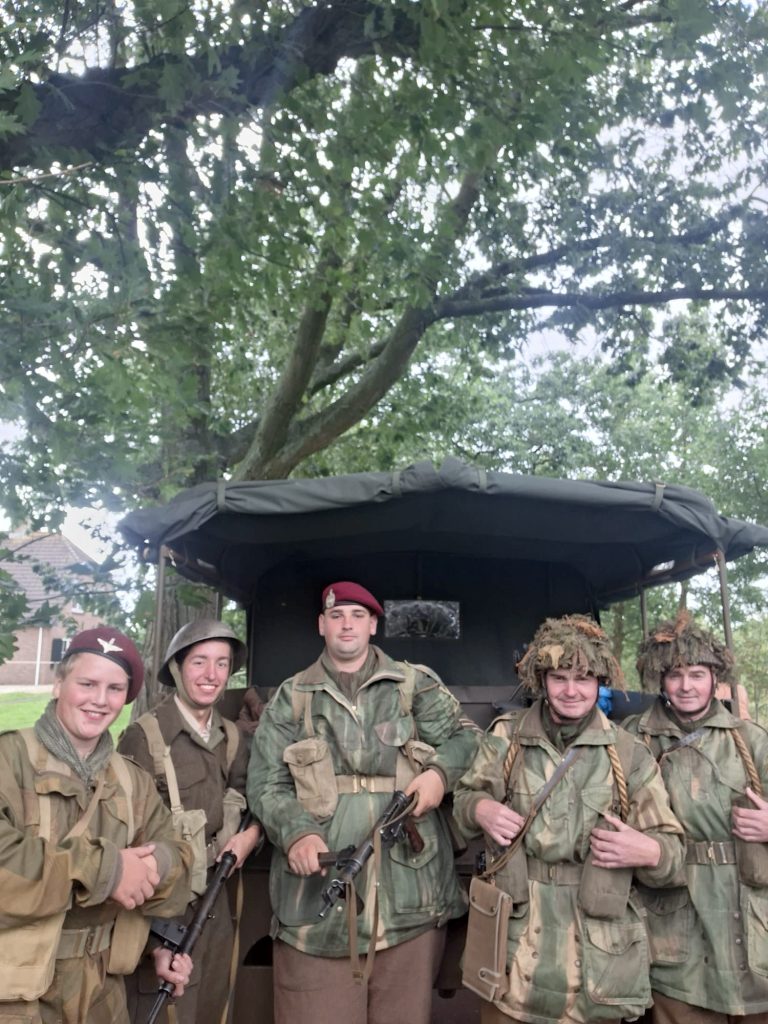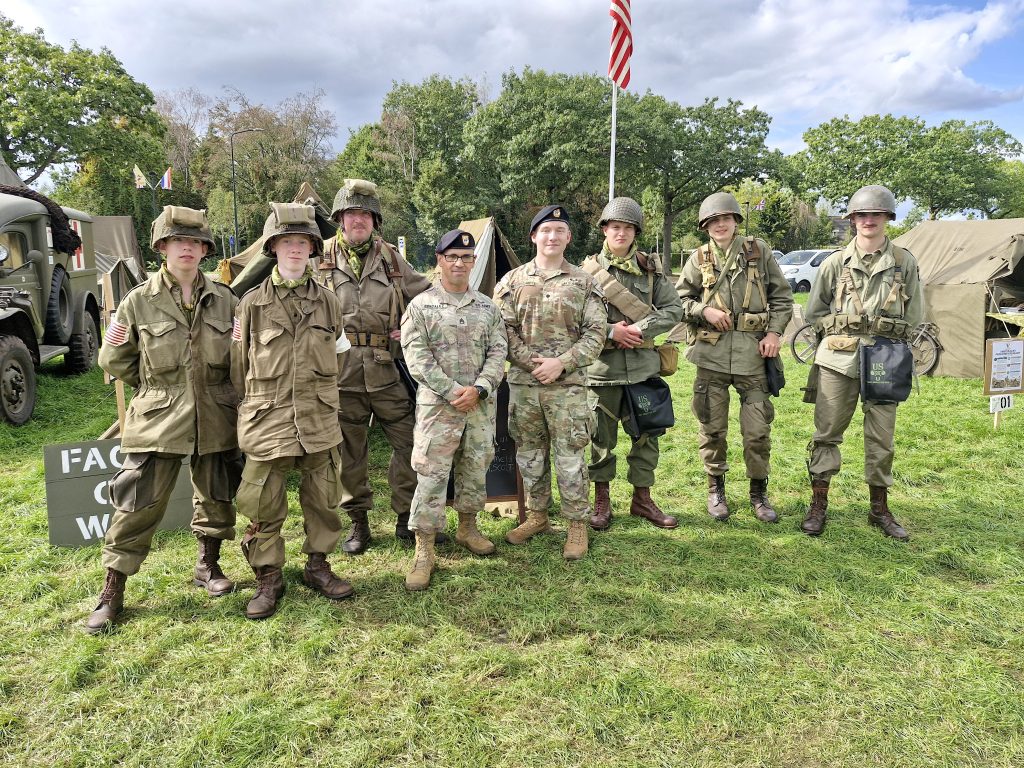
We arrived on Wednesday morning and, after pitching the pyramid tent, the lad who’d come with me and I had to get straight to work at 11.00 am to let the arriving participants in and point them in the right direction. One by one, Jeeps, Dodges, GMCs, half-tracks and trailers carrying other heavy equipment drove onto the site. A few tanks were also arriving, so we had a front-row view of what was set to take part in the event. By about 4 o’clock, we still hadn’t eaten and our shift was over. We went into the village to look for a snack bar to grab a bite to eat. Once we’d satisfied our hunger, we went back to the camp to set up the rest of our equipment. In the meantime, another of our lads had arrived, and we helped him set up his display too.
On Wednesday evening, we put the finishing touches to a few things here and there and went to bed early, as it was going to be a long week ahead.
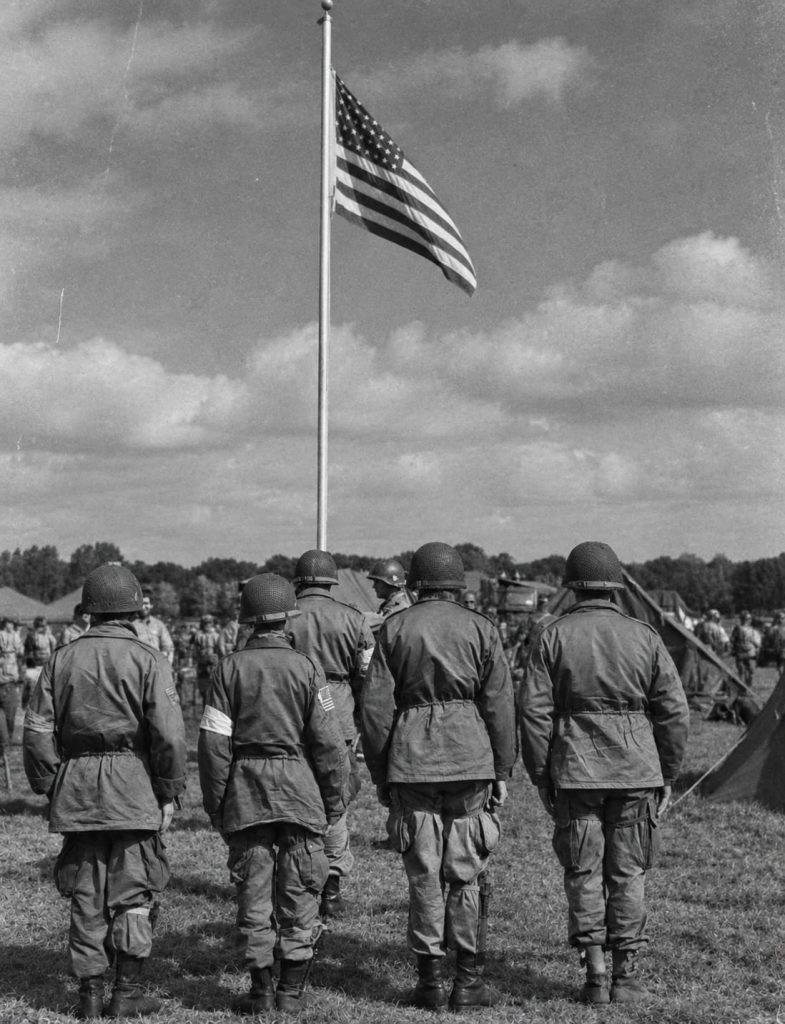
On Thursday morning, we raised the flag again, which for us means the day has begun. So, helmets on, and we did our best to get into character. We also set up a few more displays, as we’d been told that schoolchildren would be visiting that day and we were going to give them a tour. However, only a handful turned up because, as we’ve come to expect, plans change regularly. Throughout the day, we were once again able to enjoy watching all the special vehicles driving past, and another of our members arrived. We rounded off the day with a pizza.
On Friday, a few more members turned up, as people also have to work and go to school. Today was more focused on education, as we were able to welcome many more schoolchildren, and although it can be quite a struggle at times to keep their attention, we were able to tell our story on a very regular basis. Our displays, incidentally, included a very extensive first-aid post set up by one of our younger members – I’m always amazed by the sheer variety of items in his collection – and a field headquarters. A map, a typewriter and a field telephone go a long way. If you don’t take the plunge, you’ll get nowhere, and as there was a Jeep full of modern American soldiers from the 101st Airborne Division driving round, I asked if they could teach us some drills too. What could be better than being led by them? A wonderful memory that the lads will cherish for a long time to come. We also met a potential new member; he spent the whole day with us and was very enthusiastic. For dinner, it was chips again – with all the hustle and bustle, there’s really little point in going to the trouble of cooking a proper meal afterwards. Of course, nobody complains about having chips again. During the evening, we changed into our smart uniforms and it was time for a few drinks and some socialising.
On Saturday, as we do every morning, we hoisted our flag, wolfed down breakfast and got back to work. We’d planned a commemoration in Eindhoven that morning, which we attended alongside the Band of Brothers and Triple A, amongst others. A delegation of American officers was also present. Towards the end of the day, I told everyone to take it easy and relax, as we had a long evening ahead of us. The plan was for someone to drop us off by vehicle at the actual drop zones in Son, from where we would walk back to the camp. All in all, it was a walk of just 2 kilometres, but in the dark, carrying our kit and trying to be as inconspicuous as possible ‘so as not to be spotted by the Germans’, we walked back to the camp. The smiles I saw on some of their faces made the drop well worth the effort. It can still get quite warm in the evenings in September, and so we returned thoroughly sweaty. We quickly stowed away our gear and sat round the campfire with a beer, socialising with other re-enactment groups.
Sunday was already the last day of this fantastic event. There wasn’t much on the programme and many participants were already slowly starting to pack up. We did keep an eye on when the fly-bys were due and looked forward to them whilst we were tidying up. Around half past three, the first fly-by came past, consisting of a Piper Cup, a Tiger Moth and two other aircraft from the flying museum in Seppe. About half an hour to an hour later, we were also treated to the sight of two Spitfires taking to the skies to do a few laps over the campsite. It never ceases to be breathtaking that these aircraft are still airworthy after so many years. Eventually, all our things were packed away and we were able to say our goodbyes to one another. The first anniversary of Faces of War is just a few days away, but I’m proud of what we’ve managed to achieve so far, and we look forward to expanding even further in the future.